
Insights · 8 November 2026
Exit wages under the Code on Wages: what the two-working-day rule means for employers
Section 17(2) of the Code on Wages, 2019 generally requires wages due on separation to be paid within two working days. What it covers and how to adapt your F&F process.
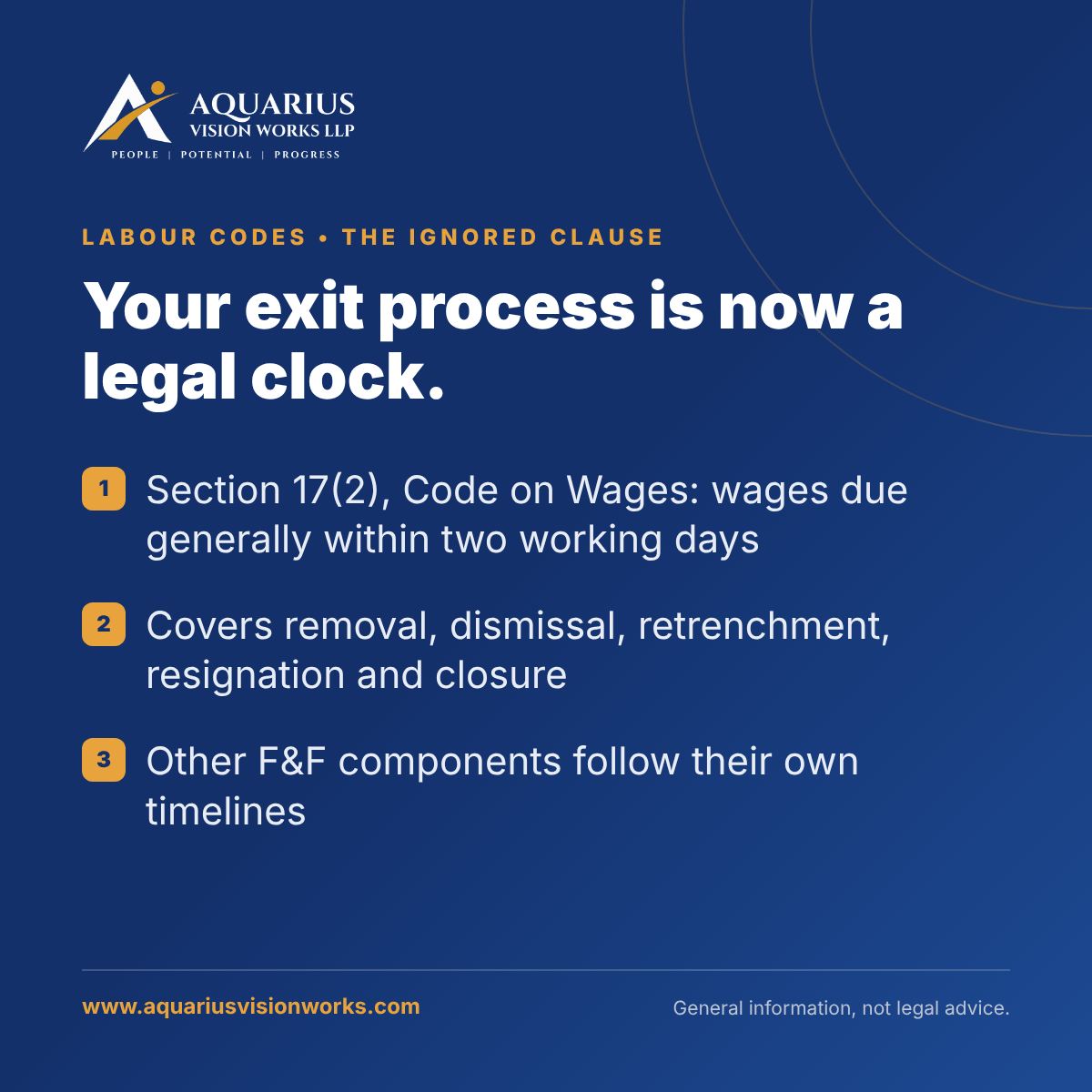
Full and final (F&F) settlement has long been one of the slowest processes in Indian HR. Clearances from IT, administration, finance and the reporting manager can stretch the final payment to 30, 45 or even 60 days. The Code on Wages, 2019, in force since 21 November 2025, draws an important line through that process.
What Section 17(2) says
Under Section 17(2), where an employee has been removed or dismissed from service, retrenched, has resigned, or has become unemployed due to the closure of the establishment, the wages payable are generally required to be paid within two working days. The obligation applies to wages due; other components of a full and final settlement may be governed by separate statutory provisions and timelines.
Why this matters
- Exit wages can no longer wait for routine clearances to finish.
- Payroll calendars built around a monthly cycle need an exit track that runs every working day.
- Delays now carry compliance risk, not just employee dissatisfaction.
Separate wages due from the rest of F&F
The most practical change is to split the settlement into two parts. The first is wages legally due, paid within the statutory timeline. The second covers other components — such as gratuity, reimbursements, recoveries and leave encashment where applicable — processed according to their own requirements. Policies, letters and payroll systems should make this distinction explicit.
Four steps to adapt your exit process
- Start clearances during the notice period, so nothing waits for the last working day.
- Set a daily payroll cut-off for exits, with a named owner in payroll.
- Update the F&F policy, exit letters and payroll configuration to reflect the two-part settlement.
- Brief HR, payroll and reporting managers, and track exits paid on time as a monthly measure.
Applicability
Applicability depends on the establishment, the employee category and the relevant state rules and notifications. Employers should assess their position under the statutory provisions and, where needed, take advice from counsel.
How an organisation treats people on their way out says a great deal about its culture. A fast, accurate final payment is one of the simplest ways to show respect.
General information, not legal advice.